

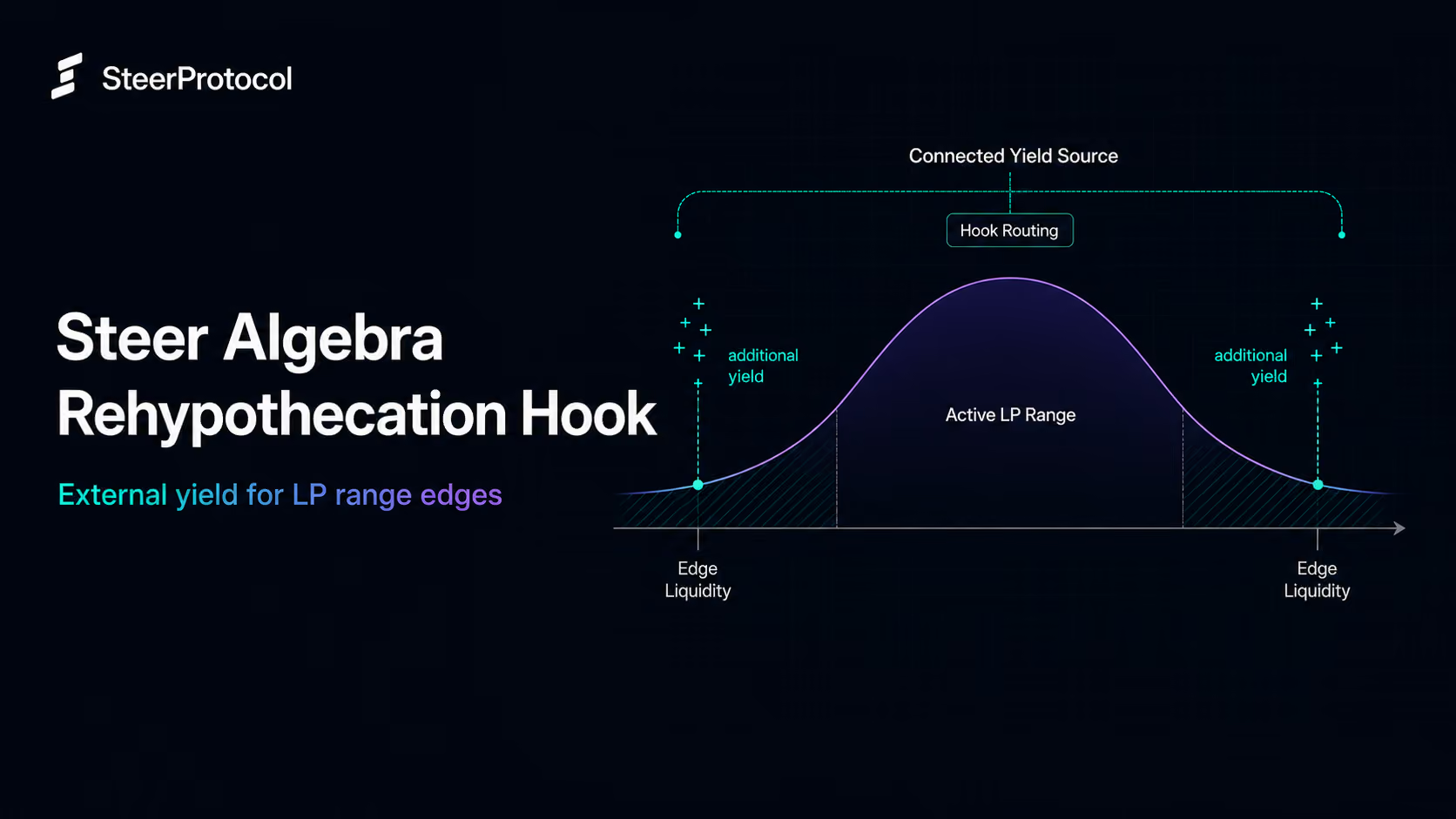
Introducing the Steer Algebra Rehypothecation Hook
A yield-aware liquidity system for the next generation of Algebra markets

Liquidity is becoming one of the most important design surfaces for new DEXs, protocols, and token markets.
It is no longer enough to seed a pool, attract TVL, and hope liquidity stays useful. Modern markets need liquidity that can adapt to swap activity, stay aligned with changing price conditions, support efficient execution, and make capital productive across more than one return source.
That is the idea behind the Steer Algebra Rehypothecation Hook.
Built for the Algebra Integral ecosystem, the Rehypothecation Hook gives DEXs and protocols a new way to design liquidity vaults that combine active liquidity management with ERC-4626 yield generation. Instead of treating AMM liquidity and external yield as separate systems, the hook brings them into one coordinated liquidity architecture.
A vault can define how capital should be allocated between two layers:
- the ALM layer, where liquidity is actively managed inside the AMM for swap execution, fee capture, and market quality; and
- the yield layer, where a defined portion of capital can be routed into approved ERC-4626-compatible vaults for external yield generation.
When market activity changes, the system can adjust. Liquidity can remain active in the AMM where it supports trading, while strategy-allocated capital can also participate in approved external yield sources. When the strategy requires more capital in the AMM, liquidity can be recalled from the yield layer, adjusted if needed, and redeployed into the active liquidity position.
This turns liquidity from a static pool deposit into a programmable capital system.
For DEXs, this means stronger market quality from day one.
For protocols, it means more intentional treasury and liquidity deployment.
For LPs, it means capital can work across multiple productive layers.
For launch teams, it means token markets can be designed with more structure from the beginning.
The Steer Algebra Rehypothecation Hook is built for a future where liquidity is not only deposited, but actively managed, productively allocated, and controlled through strategy-defined execution.
Why this matters now
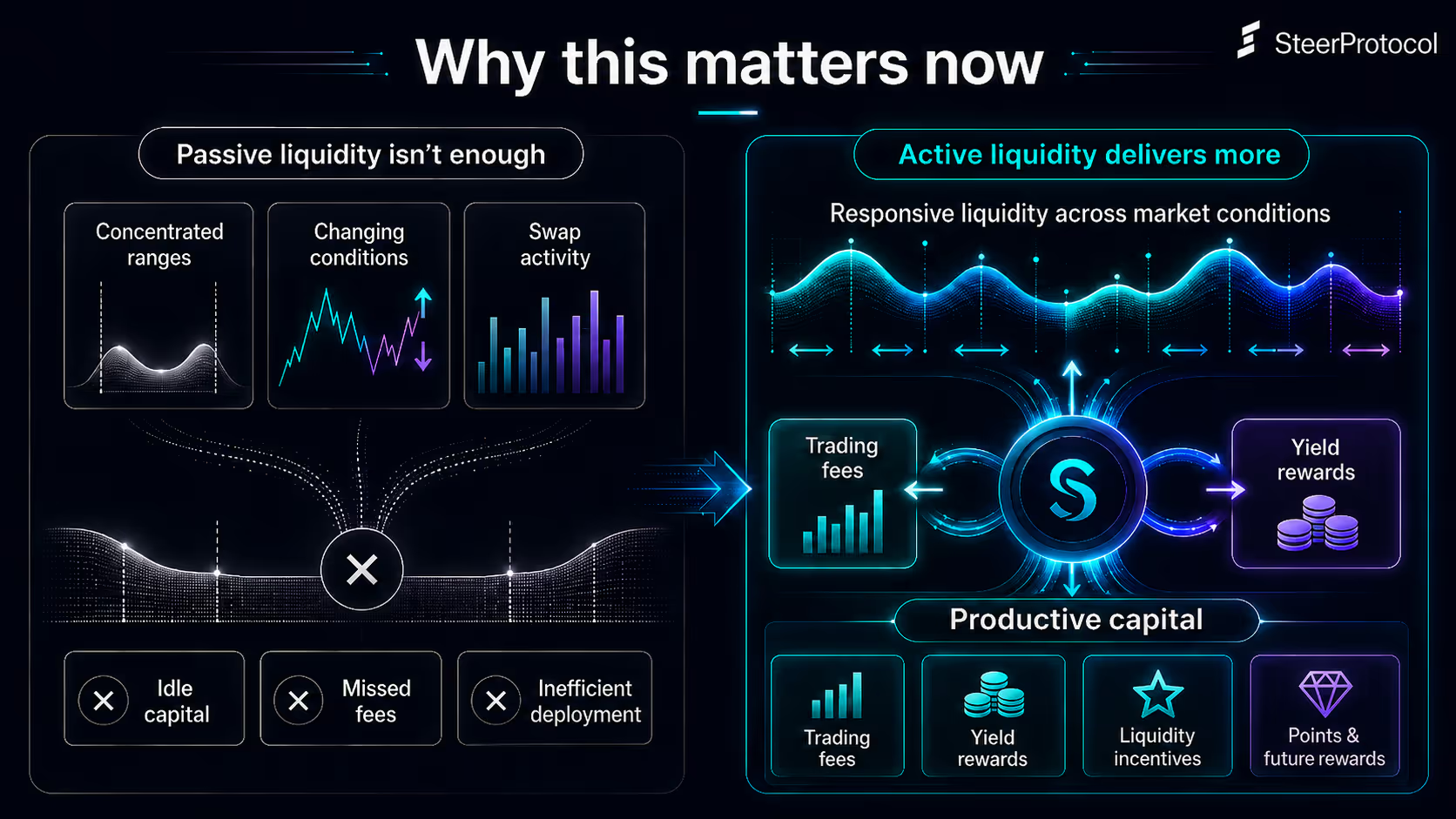
Concentrated liquidity changed AMMs by making capital more efficient, but it also made liquidity harder to manage.
A position performs only when liquidity is placed in the right range, with the right token balance, at the right time. If liquidity is too wide, it becomes inefficient. If it is too narrow, it can move out of range quickly. If rebalancing is too slow, the position can miss trading activity. And if capital is managed across separate AMM and yield systems, execution becomes fragmented.
This is especially important for new DEXs and emerging token markets.
A venue can have TVL on paper and still deliver weak execution if liquidity is poorly placed or slow to adjust. Incentives can attract deposits, but they do not automatically create good markets. Market quality depends on liquidity depth, range placement, fee density, slippage, responsiveness, and capital efficiency.
The next generation of DEXs needs more than passive liquidity.
They need liquidity systems that are:
- active enough to respond to market conditions;
- flexible enough to allocate capital across different return sources;
- structured enough to enforce strategy rules;
- efficient enough to reduce wasted capital;
- safe enough to prevent arbitrary execution paths; and
- native enough to work close to the pool lifecycle.
Algebra’s plugin architecture provides a strong foundation for this shift. Plugins can connect liquidity logic to pool lifecycle events such as swaps, making it possible to build market-aware systems directly around the pool.
Steer’s Rehypothecation Hook builds on that foundation by combining Algebra’s plugin framework with Steer’s ALM infrastructure, ERC-4626 vault routing, and controlled execution model.
The result is a new product category for Algebra markets: yield-aware active liquidity infrastructure.
What the Steer Algebra Rehypothecation Hook does
The Steer Algebra Rehypothecation Hook allows a pool or vault to manage capital across three coordinated layers.
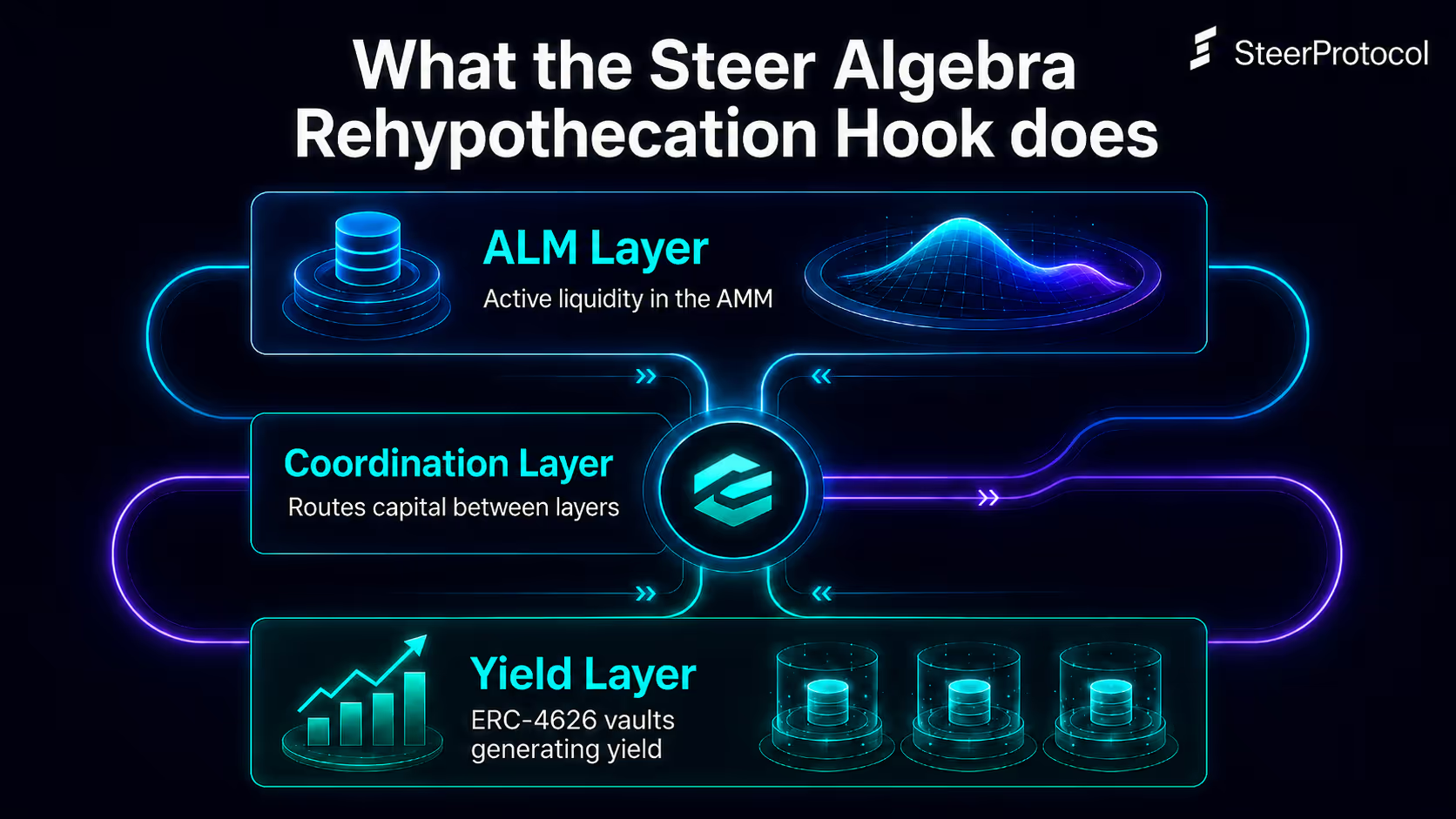
1. The ALM layer
This is where liquidity is actively managed inside the AMM.
The ALM layer focuses on range placement, swap execution support, fee capture, liquidity depth, market quality, and position creation or adjustment when strategy conditions require it.
When swap activity changes the pool state, the strategy checks whether the current liquidity position still matches the required range and token ratio. If the position remains valid, no unnecessary action is taken. If the position needs to be updated without changing the token ratio, liquidity can be redeployed directly into the new position.
If the position requires different token amounts, the system moves into the keeper-assisted adjustment flow.
2. The yield layer
This is where a defined portion of capital can be routed into approved ERC-4626-compatible vaults.
The yield layer allows idle or strategy-allocated capital to generate external yield while remaining connected to the broader liquidity system. Capital in the ERC-4626 layer is not treated as disconnected from the pool. When the strategy requires more AMM liquidity, the system can recall capital from approved yield vaults, adjust token balances if needed, and redeploy liquidity into the Algebra pool.
This allows the vault to support both market-making and yield generation without forcing protocols or LPs to choose between the two.
3. The coordination layer
The value of the hook comes from coordination.
It is not only a rebalance tool.
It is not only a yield router.
It is a strategy-controlled liquidity system that coordinates:
- AMM liquidity placement;
- ERC-4626 vault allocation;
- token ratio requirements;
- swap-triggered position checks;
- keeper-based calculation;
- on-chain validation; and
- controlled liquidity movement between productive layers.
In practice, this gives protocols and DEXs a more powerful liquidity design surface.
A pool can maintain active liquidity where it is needed for trading while allowing part of the vault’s capital to earn yield through approved external vaults. When market activity increases or the strategy needs more AMM liquidity, the system can bring capital back into the ALM layer and adjust positions accordingly.
That is what makes the hook different from a simple rebalance tool or a standalone yield router. It coordinates market-making and yield generation under one strategy framework.
How it works
The Steer Algebra Rehypothecation Hook connects on-chain strategy rules, swap-aware position checks, vault-level triggers, keeper-assisted calculation, and on-chain execution validation.
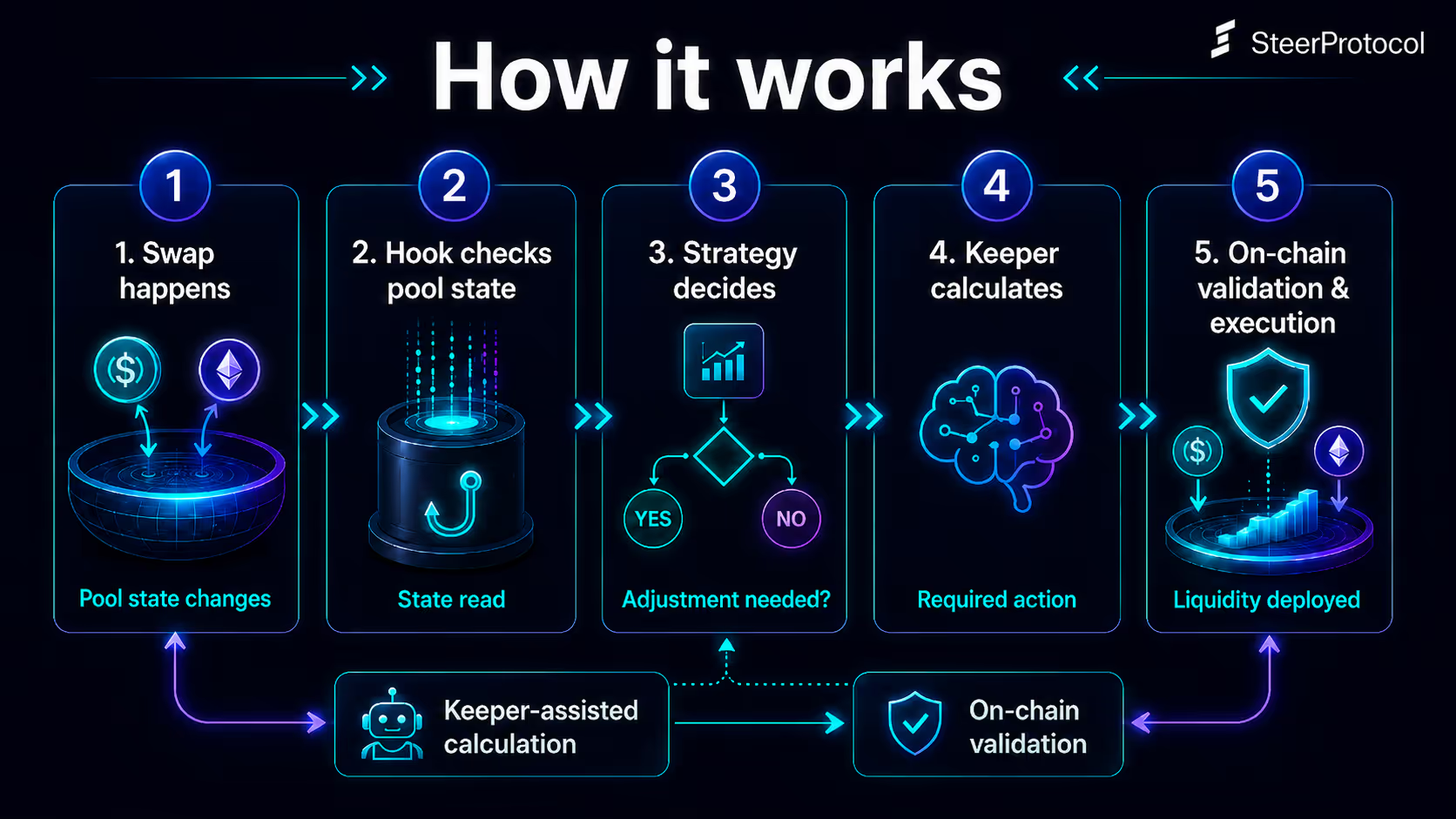
The main flow is simple:
- The strategy is deployed on-chain with predefined rules.
- A swap happens in the pool.
- The hook checks the latest pool state.
- The strategy determines whether the current liquidity position is still valid.
- If no token ratio adjustment is needed, the system can create or adjust the position directly.
- If token amounts need to change, the vault triggers Steer’s keeper and execution layer.
- The keeper calculates the required swap amount needed to restore the correct token ratio.
- The calculated action is validated through on-chain safety checks.
- Only after validation does the contract execute the swap and create or adjust the liquidity position.
This design matters because swap amounts should not be blindly trusted.
If a system accepts arbitrary swap amounts from an external executor, it can create room for gaming, bad execution, or liquidity-draining attacks. The Rehypothecation Hook avoids this by requiring swap amounts to be derived from the strategy, checked against on-chain constraints, and executed through the approved contract path.
In other words: the keeper helps calculate and submit the action, but the contract enforces the rules.
Strategy-defined rules
The strategy is not an off-chain black box deciding liquidity movement without constraints. It is deployed with on-chain configuration that defines how the vault should behave.
This can include rules for:
- liquidity ranges;
- token ratio requirements;
- capital allocation between ALM and ERC-4626 vaults;
- approved yield vaults;
- rebalance conditions;
- swap intervals;
- slippage limits;
- TWAP checks;
- routing constraints;
- keeper execution permissions; and
- emergency procedures.
That configuration creates a controlled execution environment. The system can respond to swap activity, but it still has defined boundaries around when actions are allowed, how much liquidity can move, and what swap amounts are valid.
Swap-aware position checks
When a swap happens, the hook observes the updated pool state. The strategy then evaluates whether the vault’s current liquidity position still matches its configured requirements.
This includes checking whether the current range is still valid, whether the token ratio is still appropriate, and whether the position should be recreated, adjusted, or left unchanged.
Swap activity is not treated as a passive event. It becomes a signal that helps determine whether liquidity should move.
There are two broad cases.
Case A: position update without token ratio adjustment
If the strategy determines that a new liquidity position can be created with the vault’s current token balance, the system can redeploy liquidity directly. No additional swap is required. The contract can create or adjust the position according to the strategy’s configured range and liquidity rules.
Case B: position update with token ratio adjustment
If the swap has moved the pool enough that the strategy requires a different token composition, the vault needs to adjust token amounts before creating the next position.
In this case, a swap is required. But the system does not accept arbitrary swap amounts from the keeper or any external actor. Instead, the strategy sets a trigger on the vault indicating that a token ratio adjustment is required.
The keeper calculates the required adjustment based on the strategy’s configuration, the current pool state, the required liquidity range, current token balances, target token ratio, approved routing rules, and strategy-defined risk limits.
Before execution, the calculated amount is validated through on-chain checks such as TWAP interval validation, slippage constraints, route validation, maximum movement limits, token ratio requirements, approved vault checks, and emergency guardrails.
Only validated swap amounts are passed to the contract.
The contract then performs the required operation: withdrawing capital from the ERC-4626 layer if needed, executing the approved swap, creating or adjusting the liquidity position, and deploying capital according to the strategy rules.
This is how the Rehypothecation Hook connects swap activity, ERC-4626 liquidity, ALM execution, and controlled automation into one coordinated liquidity system.
Why this is valuable for Algebra-based DEXs
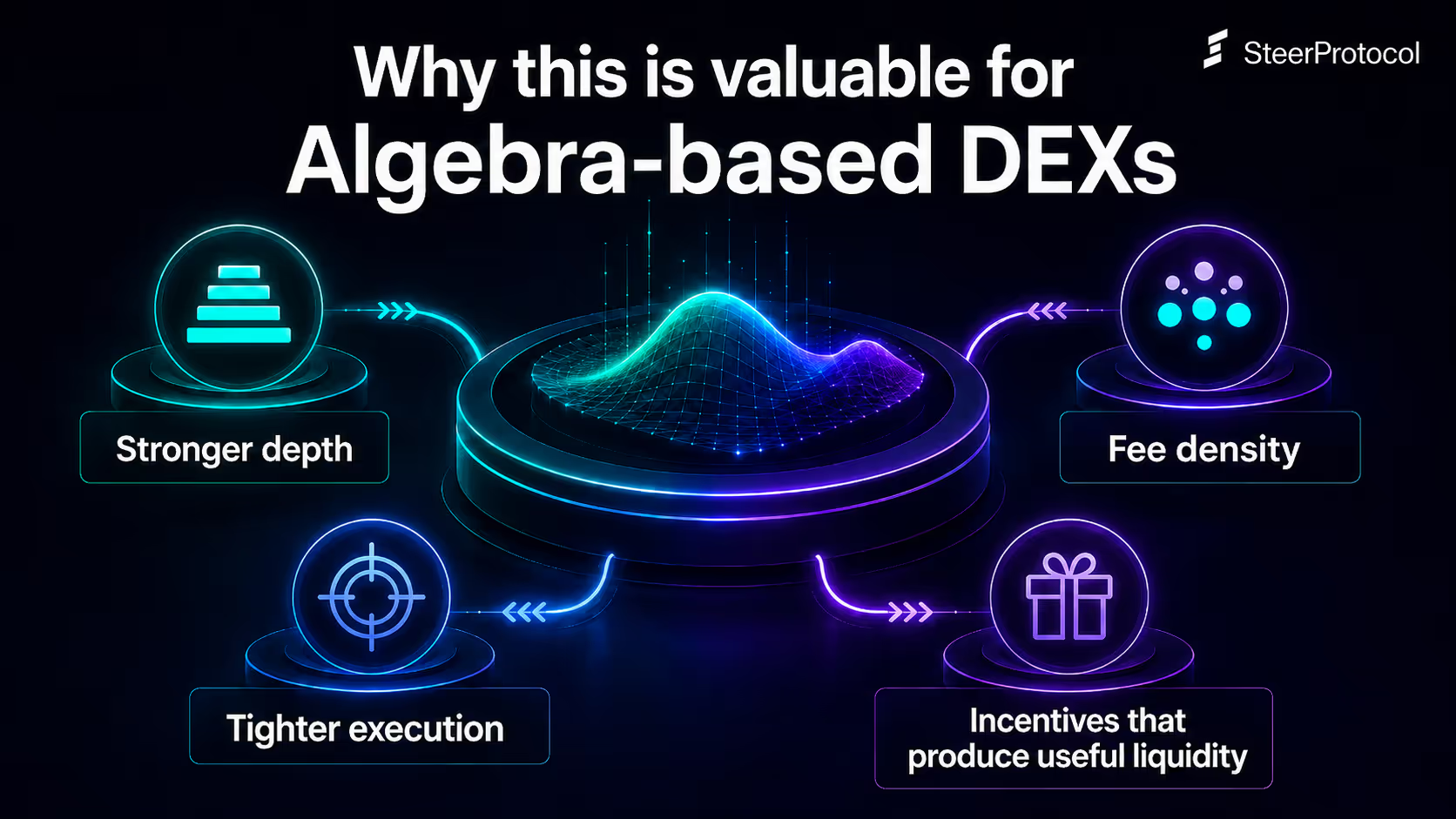
For a new DEX, liquidity is not just a TVL problem. It is a market quality problem.
The goal is not only to attract deposits. The goal is to create markets that trade well: tighter liquidity, better depth, lower slippage, stronger fee generation, and better LP retention.
The Steer Algebra Rehypothecation Hook helps DEXs launch with a more advanced liquidity layer from day one.
Instead of relying only on passive LPs or external vault wrappers, a DEX can offer pool-native liquidity vaults that actively manage capital across AMM liquidity and external yield sources.
This creates several advantages:
- stronger in-range liquidity;
- more efficient capital usage;
- improved fee density;
- better launch-pool design;
- more attractive LP products;
- differentiated infrastructure for protocols;
- safer keeper-assisted execution;
- better protection against manipulated swap amounts; and
- a stronger foundation for emissions and incentive programs.
The swap-aware execution flow is especially important. When swaps move the market, the hook can evaluate whether liquidity needs to be repositioned. If token balances need to be adjusted, the system uses controlled keeper execution with on-chain validation rather than allowing unrestricted swap amounts.
This gives DEXs a safer and more programmable way to support active liquidity.
For new Algebra Integral deployments, the hook can become a core part of the liquidity stack: not an add-on after launch, but a native market design primitive.
Why this is valuable for Algebra-based DEXs
For a new DEX, liquidity is not just a TVL problem. It is a market quality problem.
The goal is not only to attract deposits. The goal is to create markets that trade well: tighter liquidity, better depth, lower slippage, stronger fee generation, and better LP retention.
The Steer Algebra Rehypothecation Hook helps DEXs launch with a more advanced liquidity layer from day one.
Instead of relying only on passive LPs or external vault wrappers, a DEX can offer pool-native liquidity vaults that actively manage capital across AMM liquidity and external yield sources.
This creates several advantages:
- stronger in-range liquidity;
- more efficient capital usage;
- improved fee density;
- better launch-pool design;
- more attractive LP products;
- differentiated infrastructure for protocols;
- safer keeper-assisted execution;
- better protection against manipulated swap amounts; and
- a stronger foundation for emissions and incentive programs.
The swap-aware execution flow is especially important. When swaps move the market, the hook can evaluate whether liquidity needs to be repositioned. If token balances need to be adjusted, the system uses controlled keeper execution with on-chain validation rather than allowing unrestricted swap amounts.
This gives DEXs a safer and more programmable way to support active liquidity.
For new Algebra Integral deployments, the hook can become a core part of the liquidity stack: not an add-on after launch, but a native market design primitive.
Why this matters for protocols
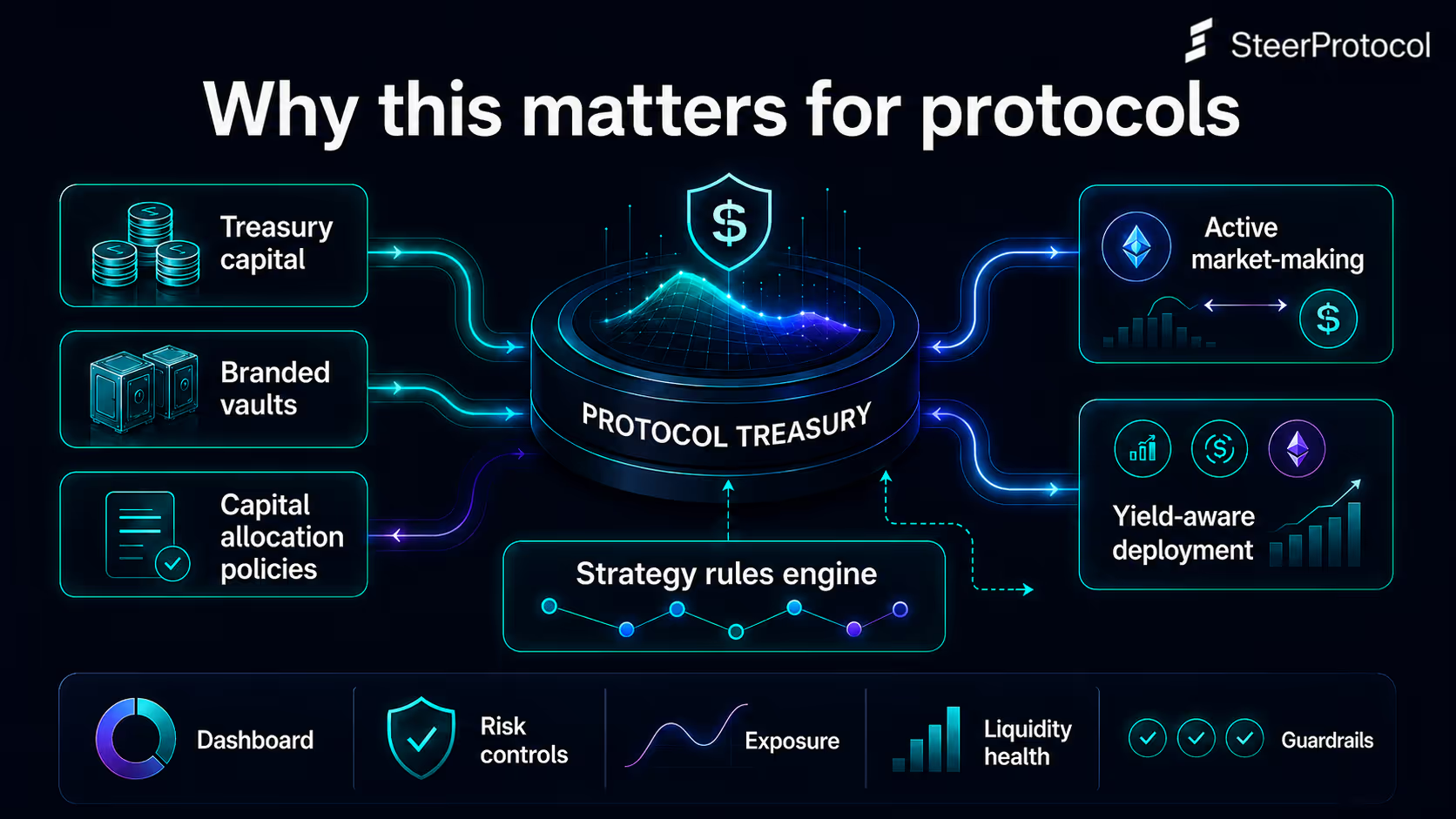
Protocols need liquidity that does more than sit in a pool.
They need liquidity that supports trading, reduces slippage, improves market depth, and aligns with treasury goals. They also need more control over how capital is deployed, especially during launch, growth, and incentive phases.
The Steer Algebra Rehypothecation Hook gives protocols a more intentional liquidity system.
A protocol can define:
- how much capital should support active market-making;
- how much capital can participate in external yield;
- which ERC-4626 vaults are approved;
- when capital should move between layers;
- when a new liquidity position should be created;
- when token ratio adjustment is required;
- what slippage and TWAP limits apply; and
- what emergency controls are available.
This gives protocols more control over both capital allocation and execution safety.
A protocol does not have to choose between AMM liquidity and yield generation. It can coordinate both inside one strategy-driven vault architecture.
This creates a cleaner foundation for:
- token launch liquidity;
- treasury-owned liquidity;
- branded LP vaults;
- incentive programs;
- ecosystem liquidity campaigns;
- stable and volatile pair management;
- yield-aware liquidity deployment;
- structured market-making operations; and
- capital allocation policies enforced through strategy rules.
The key benefit is that protocol liquidity becomes more programmable. Capital can support market quality when the pool needs it, generate additional return when allocated to approved yield sources, and move between those layers under defined strategy constraints.
Why this matters for LPs
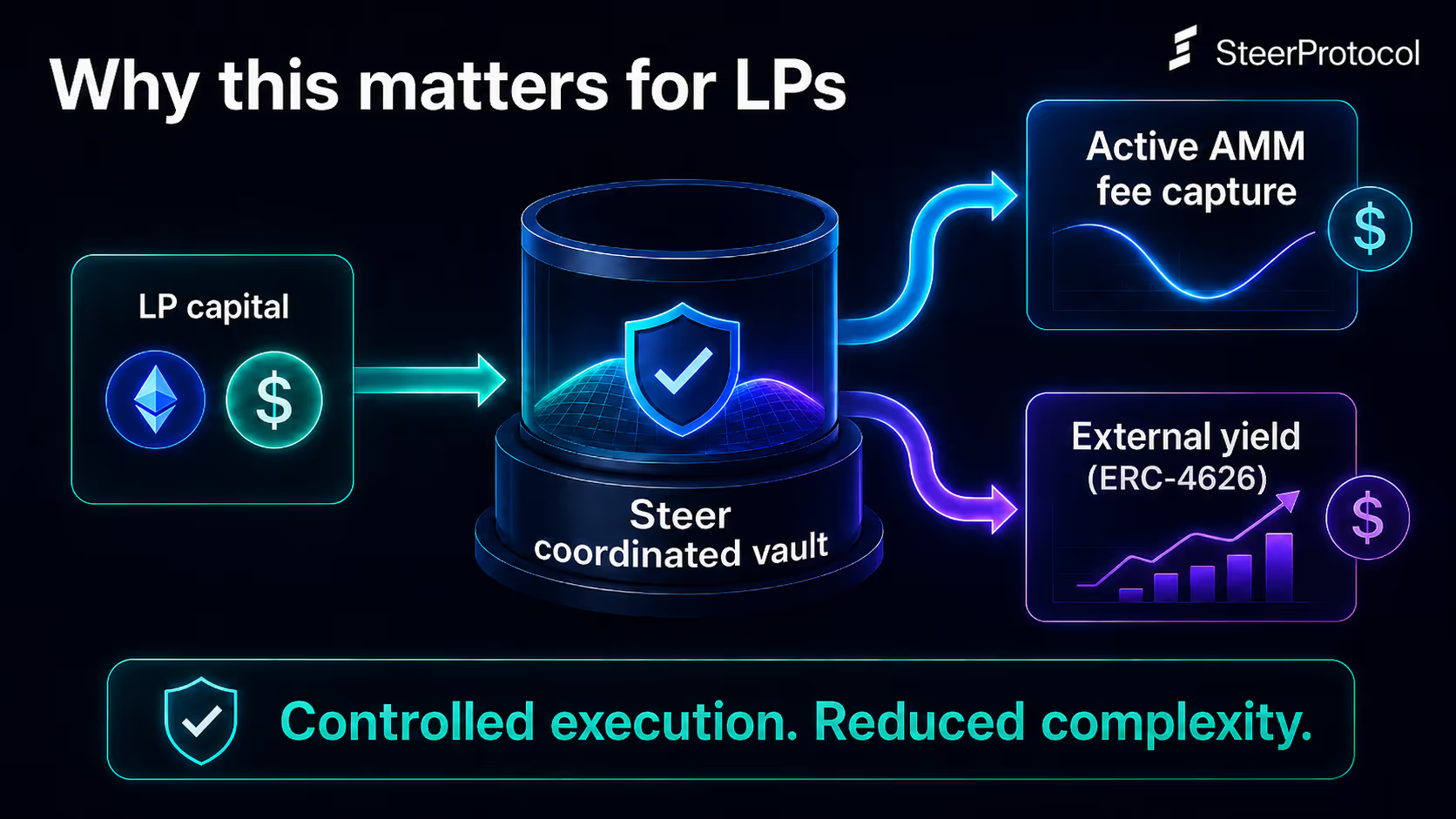
For LPs, the benefit is a more complete liquidity product.
Traditional LPing often requires users to choose between active AMM participation and external yield opportunities. Managing both manually can be complex, gas-intensive, and operationally difficult.
With the Rehypothecation Hook, LPs can access a vault that coordinates both layers for them.
The vault can keep capital active in the AMM where it supports trading and earns swap fees, while also allocating a defined portion to approved yield sources. When more liquidity is needed in the AMM, the system can move capital back into the active strategy.
The hook also improves the structure around execution.
When the strategy needs to adjust token amounts before creating a new position, the keeper calculates the required swap amount, but the on-chain contract validates that action against strategy rules, TWAP intervals, slippage limits, routing constraints, and other guardrails.
For LPs, this matters because vault safety depends not only on where liquidity is deployed, but also on how rebalances and swaps are executed.
LPs get access to a more advanced vault experience that can provide:
- less manual liquidity management;
- exposure to active AMM fee capture;
- potential external yield through approved ERC-4626 vaults;
- strategy-defined capital allocation;
- more responsive liquidity repositioning;
- reduced operational complexity;
- clearer execution boundaries; and
- protection against arbitrary swap amount submission.
This creates a more complete LP product: one that combines market-making, yield-aware allocation, and controlled execution inside a single vault framework.
Why this matters for TGE and launch teams
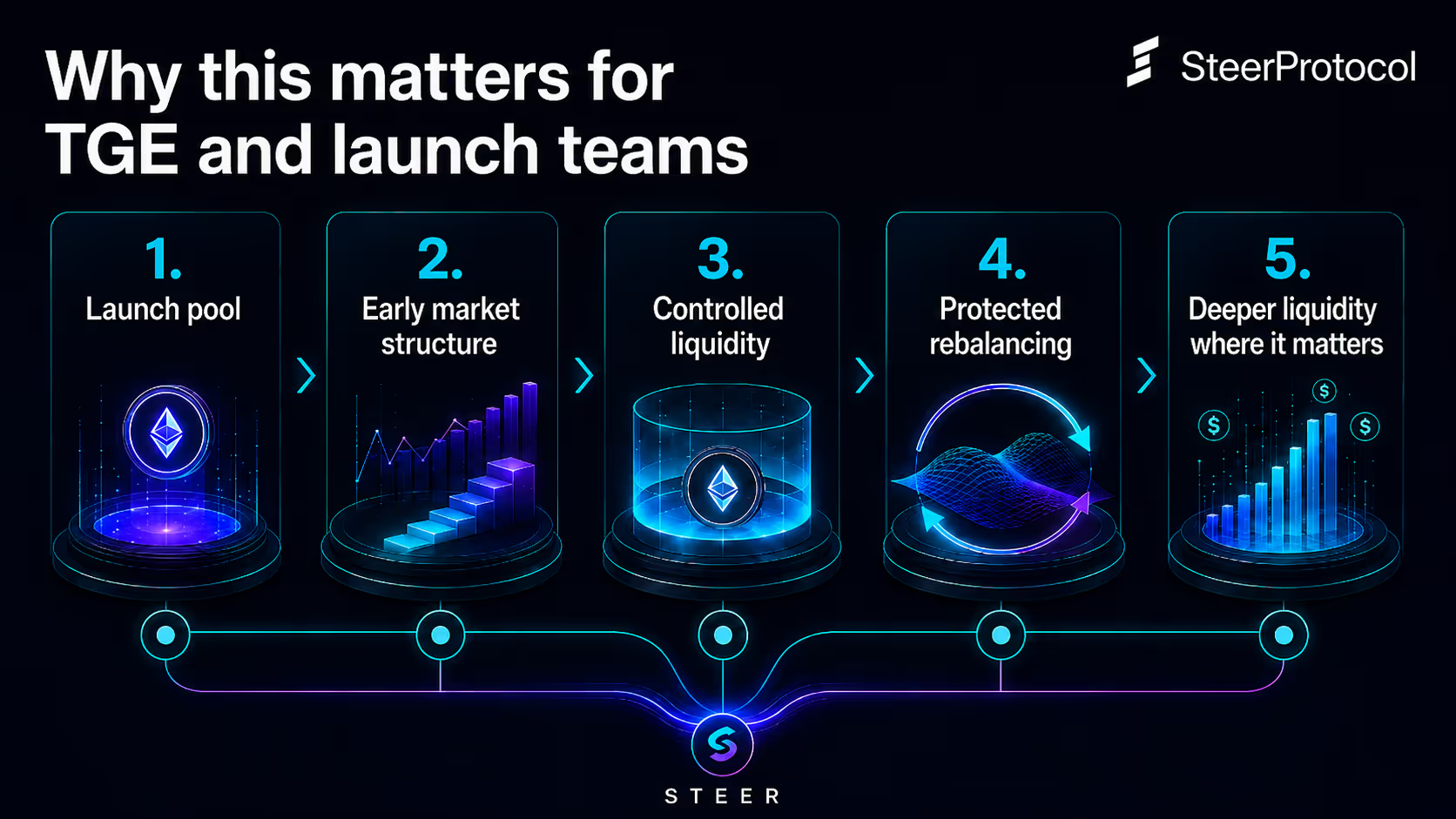
Token launches are path-dependent.
The first days of trading can shape market perception, liquidity depth, volatility, holder behavior, and long-term confidence. Yet many launch teams still treat liquidity as a static deployment: seed the pool, add incentives, and react later if the market becomes inefficient.
The Steer Algebra Rehypothecation Hook gives launch teams a more structured approach.
A launch vault can define:
- how much capital should remain active for market-making;
- how much capital can be routed into approved yield vaults;
- what liquidity ranges should be used;
- when swaps should trigger position checks;
- when token ratio adjustment is required;
- what slippage and TWAP checks apply; and
- how liquidity should move back into the AMM when trading conditions require it.
This allows launch liquidity to become more responsive and capital-efficient from the beginning.
The safety model is especially important during launches. Launch pools can be volatile, thin, and more vulnerable to manipulation. If a system allowed arbitrary swap amounts to be submitted during a rebalance, it could create unnecessary risk.
The Rehypothecation Hook reduces this risk by requiring strategy-aware calculation and on-chain validation before execution.
For teams launching new assets, this can help create better early market structure: deeper liquidity where it matters, more disciplined capital deployment, and a stronger foundation for post-launch liquidity programs.
Built for disciplined liquidity operations
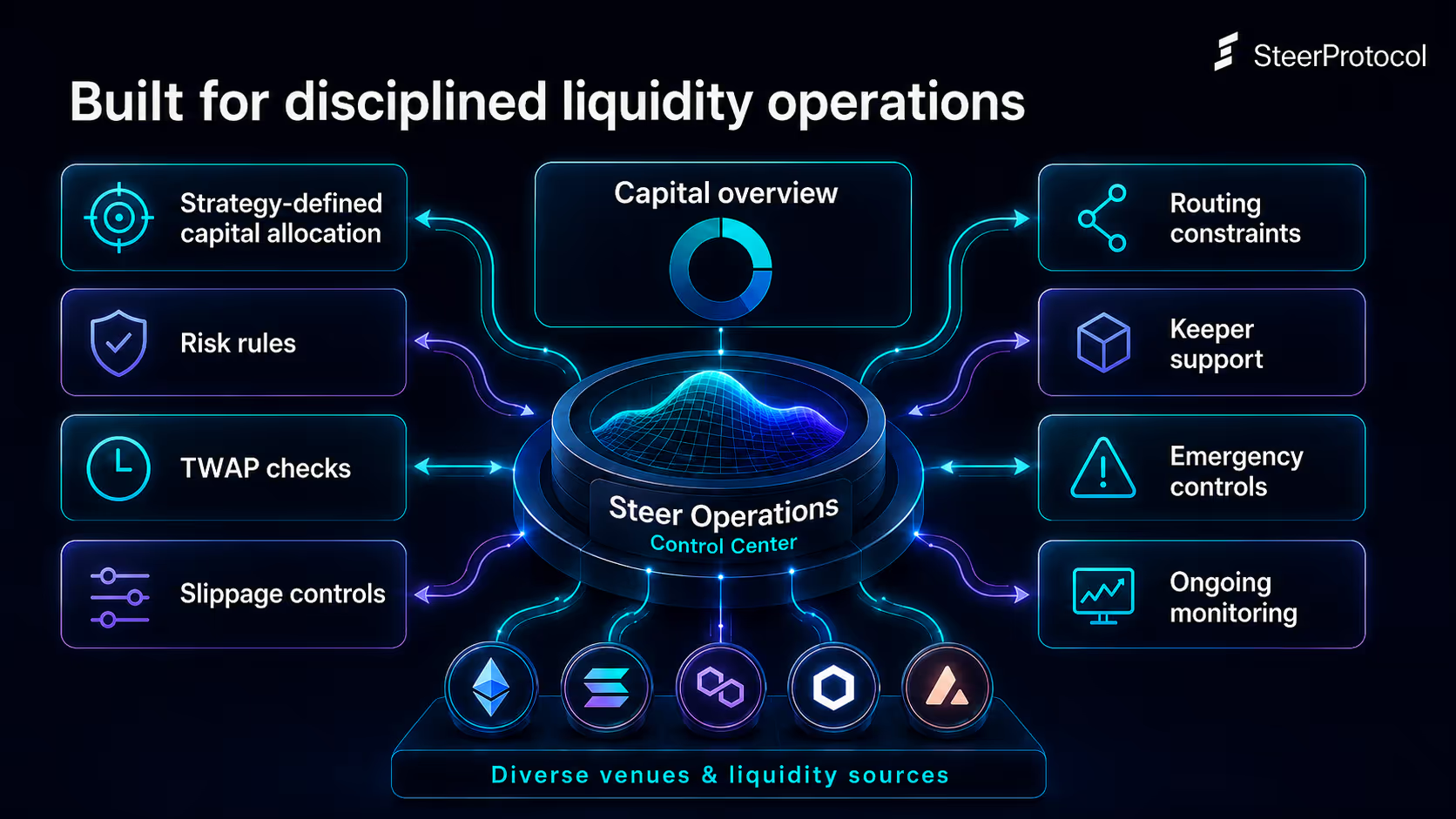
The next phase of DeFi liquidity will not be won by passive TVL alone.
It will be won by systems that can manage liquidity as an operating function:
- where capital is allocated;
- how it moves;
- what risks are allowed;
- which strategies are approved;
- how execution is calculated;
- how swap amounts are validated; and
- how emergency controls are enforced.
The Steer Algebra Rehypothecation Hook is built for that operating model.
It brings together:
- Algebra’s plugin framework;
- Steer’s active liquidity management infrastructure;
- ERC-4626-compatible yield routing;
- strategy-defined capital allocation;
- pool-aware execution triggers;
- off-chain strategy computation;
- keeper-based execution support;
- TWAP validation;
- swap and slippage controls;
- routing constraints;
- on-chain execution checks; and
- emergency procedures.
This gives DEXs and protocols a more serious way to manage liquidity across market-making and yield generation.
The goal is not just to automate liquidity.
The goal is to make liquidity more programmable, more productive, and more aligned with the needs of the market.
Why the Steer Algebra Rehypothecation Hook is different
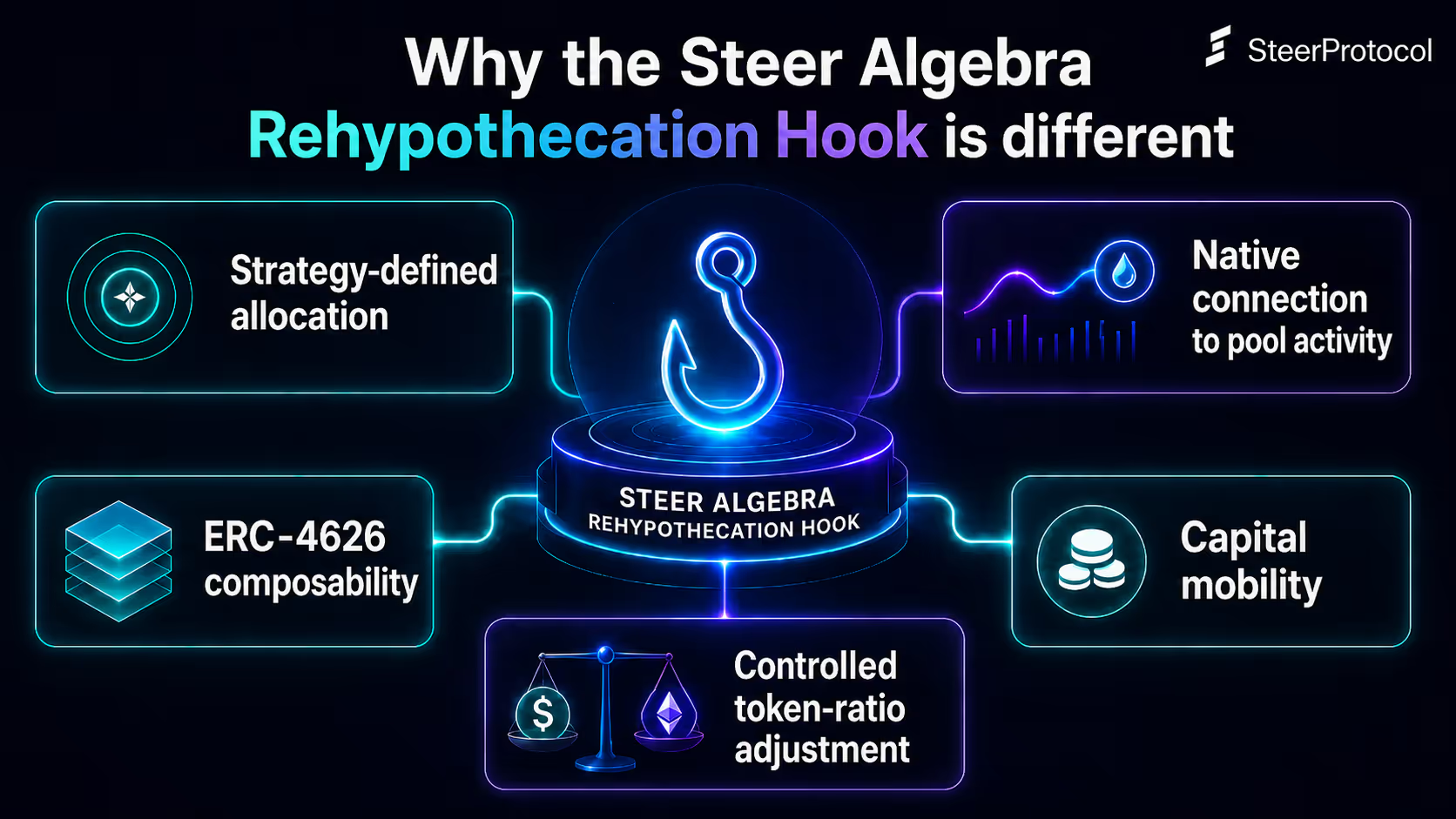
The Rehypothecation Hook introduces several important advantages for Algebra-based markets.
Strategy-defined allocation
Vault operators can define how capital should be split between active AMM liquidity and ERC-4626 yield vaults. This creates a clear capital allocation framework instead of a fragmented liquidity setup.
Native connection to pool activity
Because the hook is built around Algebra’s plugin architecture, liquidity logic can be connected more closely to swap activity and pool lifecycle events. Swaps can become signals for strategy evaluation, position creation, and liquidity movement.
ERC-4626 composability
The hook uses ERC-4626-compatible vault infrastructure for standardized yield routing, making it easier to integrate with approved external yield sources.
Capital mobility
Capital can move between the yield layer and the ALM layer when the strategy requires it. This allows the vault to support both external yield generation and active market-making.
Controlled token-ratio adjustment
When a new position requires a different token ratio, the strategy can trigger Steer’s keeper and execution layer to calculate the required swap amount. That amount must pass on-chain checks before execution.
This prevents arbitrary swap amount submission and helps protect vault liquidity from manipulation, gaming, or drain attempts.
Flexible strategy design
The system can support different liquidity strategies, including single-band, multi-band, and more advanced ALM approaches depending on the market and operator requirements.
Better LP product design
DEXs and protocols can offer LPs a more advanced vault experience that combines active liquidity management with yield-aware capital allocation.
Stronger market design for new venues
New Algebra-based DEXs can launch with liquidity infrastructure that is active, configurable, and differentiated from day one.
A new primitive for yield-aware liquidity
The Steer Algebra Rehypothecation Hook represents a shift in how liquidity can be designed.
Instead of static positions, markets can use active liquidity management.
Instead of separating AMM liquidity and external yield into disconnected systems, vaults can coordinate both inside one strategy framework.
Instead of treating liquidity as a passive deposit, protocols can define how capital should move across productive layers.
And instead of relying only on manual management or simple automation, DEXs can use pool-aware hooks, strategy computation, keeper execution, and on-chain validation to build more adaptive liquidity products.
This is why the product matters.
The Steer Algebra Rehypothecation Hook gives Algebra-based DEXs, protocols, LPs, and launch teams a new way to make liquidity more active, more productive, and more intelligently allocated.
Liquidity is becoming programmable.
The Steer Algebra Rehypothecation Hook is built for that future.
Recent Insights and Updates
Expand your knowledge with these hand-picked articles, tailored to keep you ahead in the space.

.avif)